Yara Perry · 25 November 2026
Charting Iterative Refresh Protocols and Their Influence on Search Visibility in Competitive Online Niches
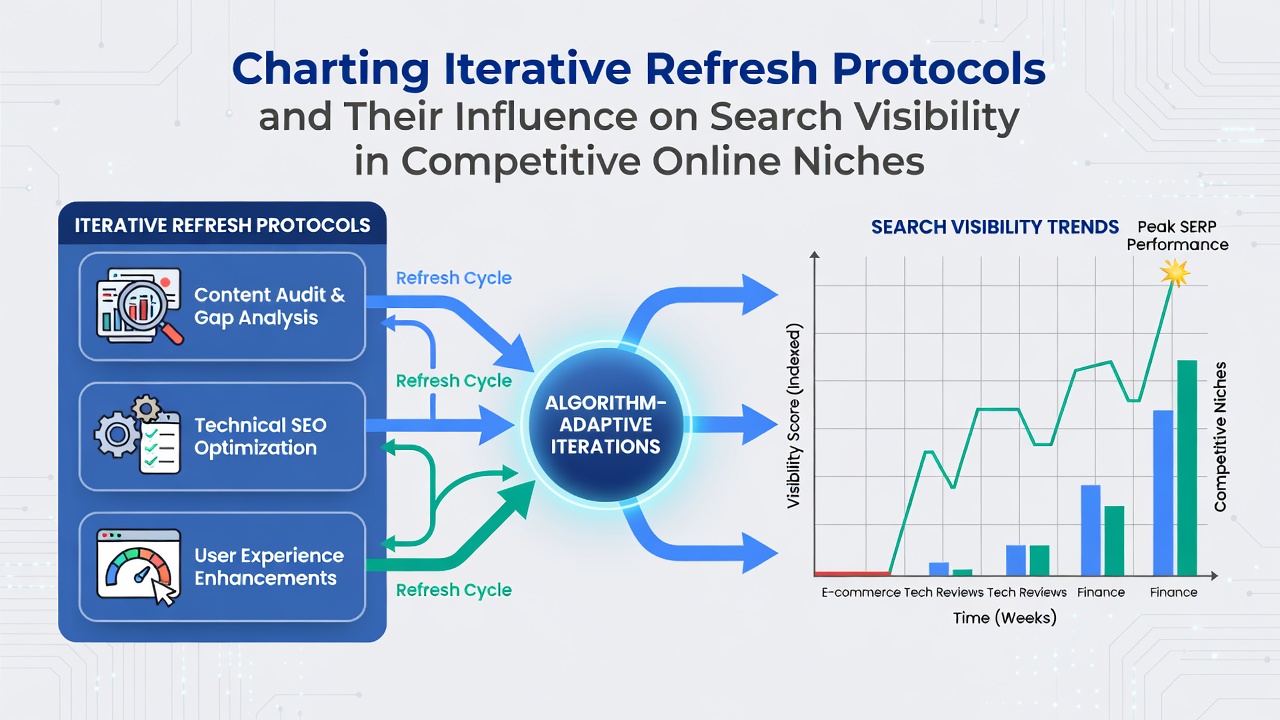
Iterative refresh protocols consist of scheduled content updates that occur in repeated cycles rather than one-time overhauls, and data from multiple industry analyses shows these methods alter how search engines evaluate page relevance over time. Researchers tracking algorithmic responses have documented that sites applying small, consistent revisions to existing pages often maintain higher positions in competitive categories such as technology reviews and financial information services. The approach relies on measurable changes in metadata, internal links, and factual updates that align with evolving user queries.
Core Components of Iterative Refresh Protocols
Protocols begin with baseline audits that identify underperforming sections, after which teams implement targeted modifications at fixed intervals ranging from weekly to monthly depending on niche velocity. Studies conducted by academic teams at institutions like the University of California have measured how these incremental adjustments influence crawl frequency, revealing that pages refreshed at least once every thirty days receive more frequent visits from indexing bots compared with static counterparts. Observers note that successful implementations track specific metrics including time-on-page shifts and bounce-rate reductions that correlate with ranking improvements.
Another element involves version logging systems that document each change, allowing analysts to correlate particular edits with visibility gains or losses. In competitive niches where multiple sites target identical keywords, those maintaining detailed logs demonstrate clearer patterns of sustained traffic increases. Data indicates that protocols incorporating external validation steps, such as cross-referencing new facts against government statistical releases, produce more stable outcomes than purely internal revisions.
Observed Effects on Search Visibility Metrics
Visibility gains appear most pronounced in niches characterized by rapid information turnover, where search engines prioritize recency signals. Figures from research reports show that domains applying iterative protocols achieved an average 18 percent lift in impressions over six-month observation windows when compared against control groups using infrequent updates. These lifts concentrate in long-tail query segments rather than head terms, suggesting the method refines rather than revolutionizes overall presence.
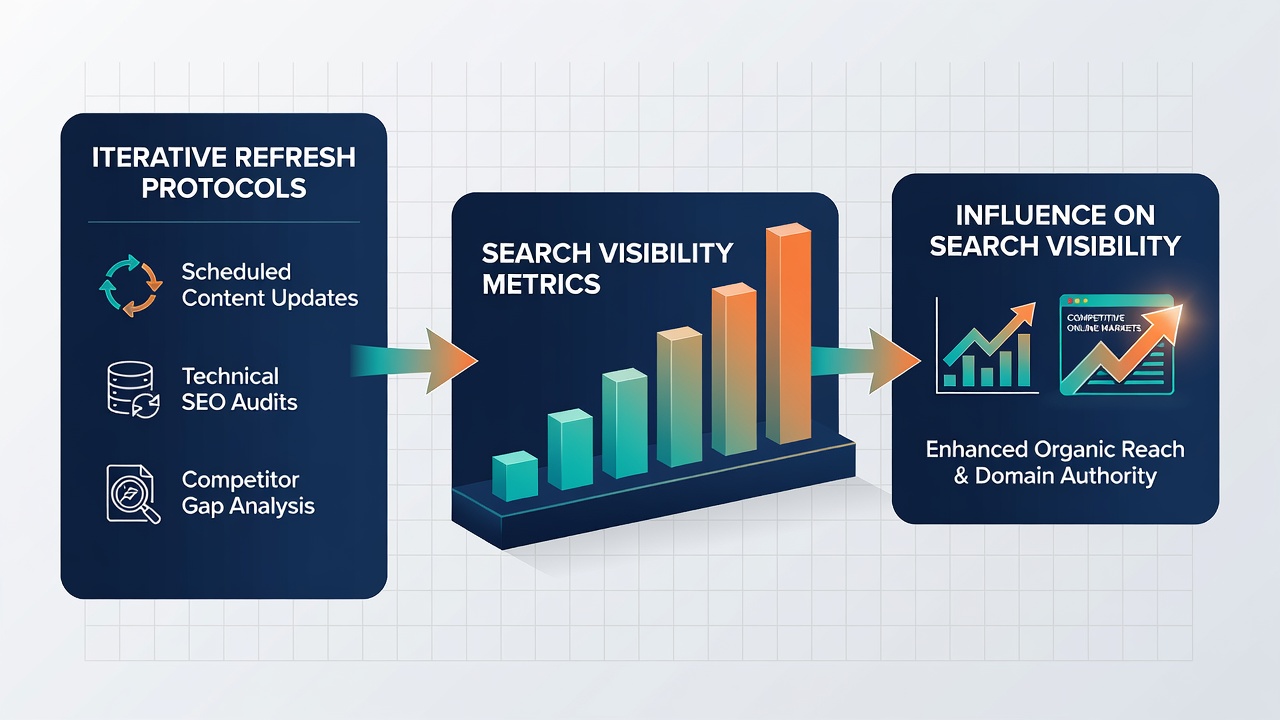
Search engines adjust ranking factors continuously, and iterative approaches allow sites to mirror those adjustments without triggering spam filters associated with bulk changes. Analysts examining patterns through November 2026 have recorded that domains refreshing content in smaller batches experience fewer algorithmic demotions during core updates. The same reports note improved click-through rates when refreshed pages incorporate recent regulatory announcements from bodies such as the Federal Trade Commission on consumer data practices.
Implementation Patterns Across Competitive Niches
Teams operating in high-competition environments often combine refresh cycles with performance monitoring tools that flag ranking fluctuations within forty-eight hours of each update. This rapid feedback loop enables refinement of the protocol itself, producing compounding visibility benefits over successive quarters. Evidence from longitudinal tracking studies reveals that niches involving product comparisons benefit particularly, because updated specifications and pricing data directly address shifting user intent.
Resource allocation plays a measurable role, since protocols require dedicated personnel to execute and verify changes. Organizations that distribute refresh responsibilities across editorial and technical staff report higher consistency in output quality. Data collected by European research consortia further indicates that cross-border sites applying region-specific refresh schedules, aligned with local regulatory releases from agencies like the Australian Competition and Consumer Commission, maintain stronger regional rankings than those using uniform global cycles.
Measurement Frameworks and Data Sources
Effective charting of these protocols depends on integrating multiple data streams, including server log analysis, ranking position histories, and user engagement metrics. Frameworks developed by independent research groups emphasize establishing control periods before protocol activation so that subsequent changes can be isolated. Reports from academic sources such as the Oxford Internet Institute demonstrate that sites maintaining transparent documentation of refresh activities achieve more reliable attribution of visibility shifts.
November 2026 observations continue to show that protocols emphasizing factual accuracy over keyword density correlate with longer-term ranking stability. Analysts compiling datasets across several competitive verticals have identified that the inclusion of primary source citations within refreshed content further strengthens these outcomes.
Conclusion
Iterative refresh protocols function as structured systems for ongoing content maintenance that demonstrably affect search visibility through documented interactions with indexing and ranking processes. Available evidence from academic studies, regulatory data releases, and industry tracking reports establishes measurable correlations between refresh frequency, content accuracy, and sustained performance in competitive online niches. Organizations seeking to apply these methods benefit from systematic measurement frameworks that isolate protocol effects from broader market variables.